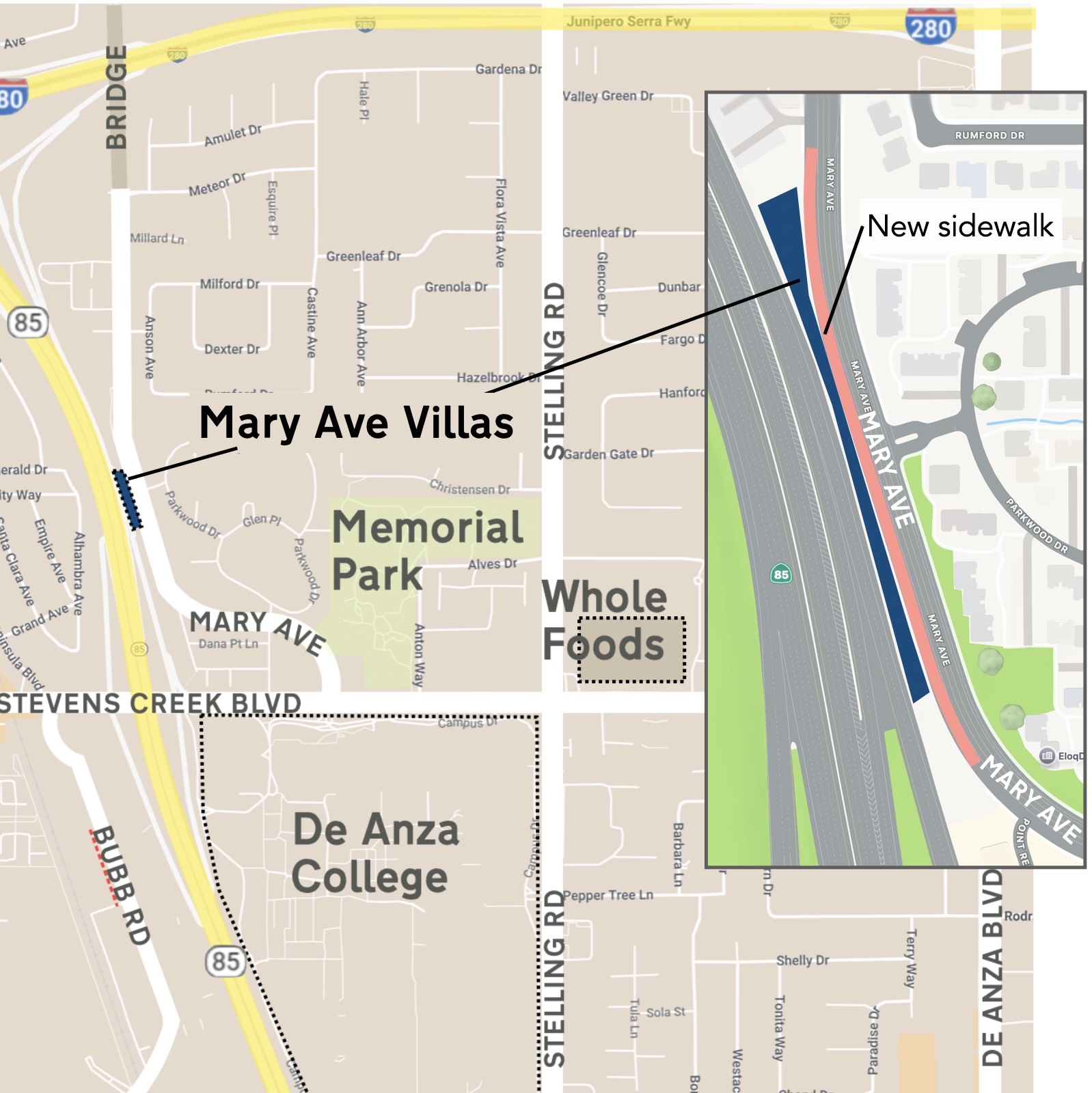
Mary Avenue Villas is a new affordable housing project, which will have 40 units, 19 of which are set aside for intellectually and developmentally disabled adults. The parcel it will be built on is a very narrow slice of unused surplus city land (0.8 acres) between Mary Avenue and the sound wall of CA-85.
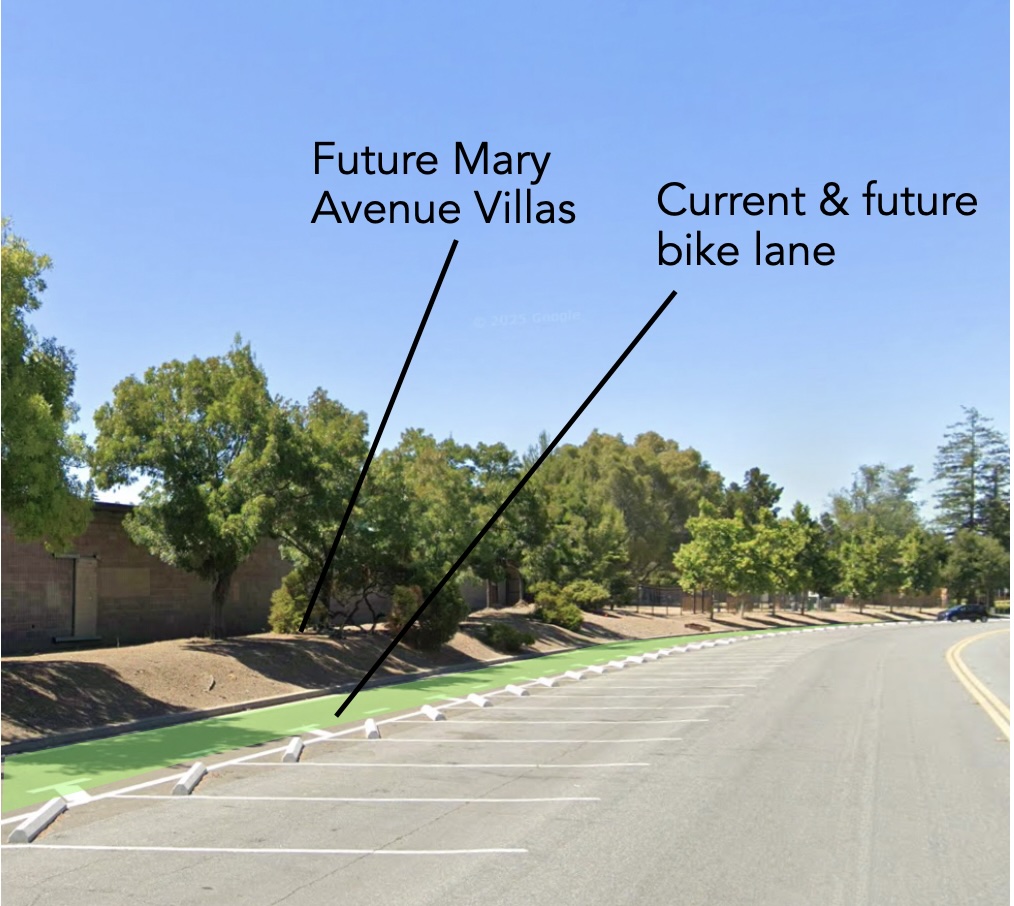
The project includes a new west side sidewalk connecting the Westport Development on Mary/Stevens Creek to Calle de DeAnza apartments, which will make the sidewalk a continuous stretch to the Mary Avenue bridge. The bike lanes on Mary Avenue are unaffected in the project, so safe travel along Mary Avenue for cyclists will continue. Part of the project is a reduction of parking along Mary Avenue.
Is the project a “done deal”?
Probably. The council on March 3 approved key provisions, including a DDA (Disposition and Development Agreement, which allows Charities Housing to build), and the surplus-land designation. A local group of homeowners filed a lawsuit against the city on March 11, curiously arguing many of the same points and in the same language as Councilmember Wang. It’s likely they will not prevail as Councilmember Fruen stated in the February 3 meeting, but a judge ultimately will decide the merits of their claims. The cost of defending the lawsuit will be paid by Cupertino taxpayers.
Support for the project yet a close vote
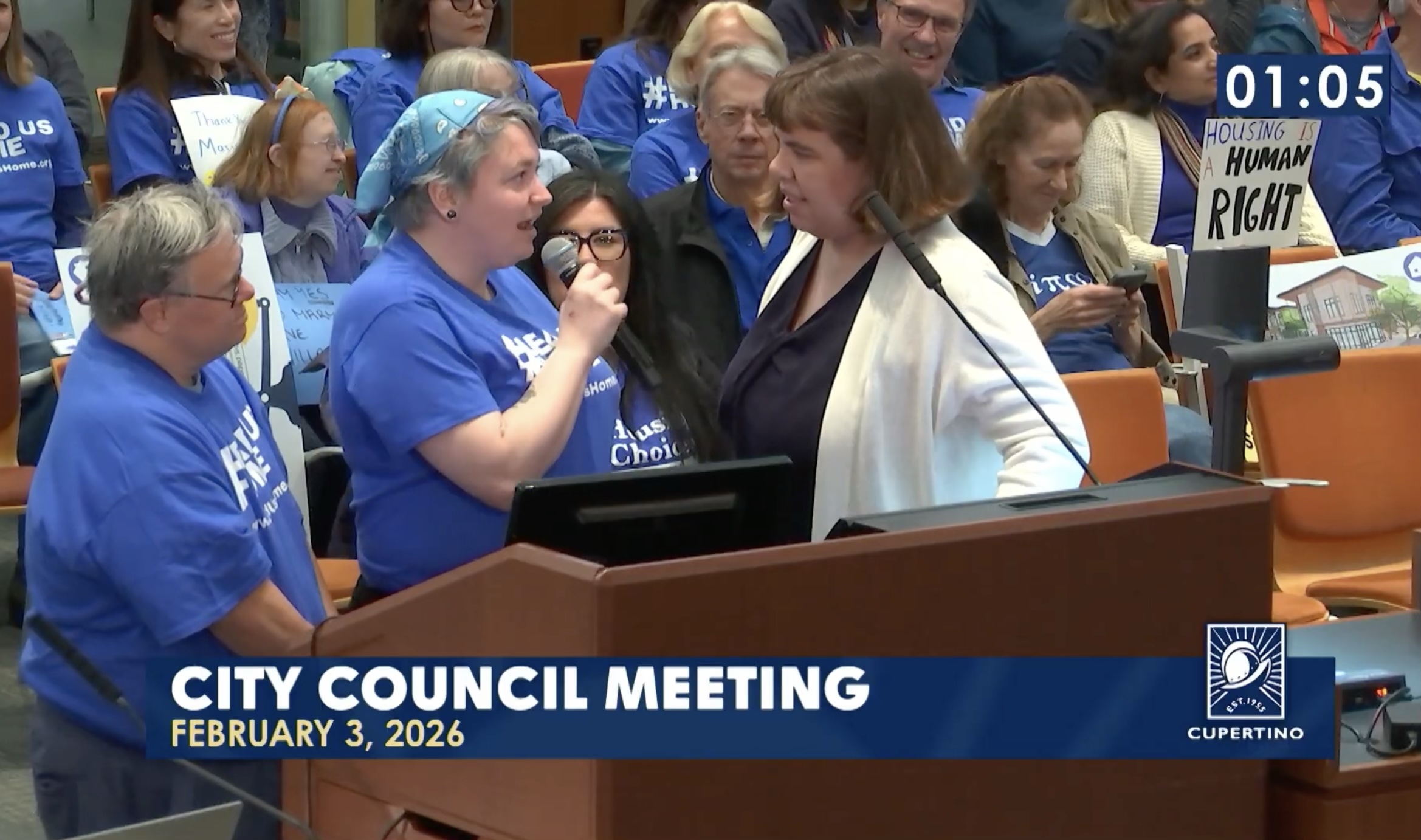
Hundreds of residents came to Council in support on February 3, likely because Cupertino has very little affordable housing (only 225 units built in the last 10 years). Some attendees cited the benefit of improving pedestrian travel with the new sidewalk, and the clear need for IDD adult housing. Despite this support, the project vote was very tight on February 3, only passing with three of five possible votes. Mayor Moore and Councilmembers Fruen and Mohan voted for the project to move forward. This 3-2 vote was again mirrored on March 3 for the next set of approvals.
Councilmember Ray Wang voted no on February 3, saying the project was “working against residents.” Vice Mayor Chao would also not vote for the project, for the reason that the city did “not having sufficient legal reasons to declare it surplus land”, a claim which was debunked by the Cupertino City Attorney and Councilmember Fruen, also an attorney, in the February 3 meeting and in a previous meeting.
Parking loss is a key complaint
The loss of 89 spaces of parking on Mary Avenue was a great concern to local neighbors. The project developers showed that the current parking was very underutilized and there was very little traffic on Mary Avenue. (See this video from Charities Housing from September 2025 which shows how little traffic and parking are on Mary Avenue.)
The festivals held at Memorial Park approximately 4 days per year see significant additional traffic and cars parked on the street. The expectation is that those cars on those four days could park in the large DeAnza lot across Stevens Creek Boulevard, where most festival patrons do today.
Keeping the bike lanes on Mary Avenue was discussed in previous votes on the project. In July 2025. Then-Vice Mayor Moore commended the architect for modifying the plan to allow for as much parking as possible yet still retaining the bikeways on both sides, as “[we have a] $14 million Don Burnett/Mary Avenue bridge for the pedestrians and the bicyclists” which connects to the bikeway. Then-Mayor Chao made a motion on that day, seconded by Councilmember Wang, to eliminate the bike lanes on Mary Avenue to have more parking. That motion thankfully failed.
This new affordable housing project looks like it has considered the entire community in its design, including those that wish to continue to use active transportation safely on Mary Avenue and enjoy using the Don Burnett Bridge to cross into Sunnyvale.